Kitchen Benchtop Materials: Pros, Cons & How to Choose
Choosing the right kitchen benchtop is one of the most important decisions in any kitchen design. Benchtops need to cope with heat, spills, humidity, and daily wear all while complementing your cabinetry and overall design.
Below is a detailed guide to the most popular kitchen benchtop materials used in homes, including their pros, cons, and what they’re best suited for.
1. Engineered Stone (Quartz Benchtops)
Engineered stone remains one of the most popular kitchen benchtop materials in Australia. Made from crushed quartz mixed with resins and pigments, it offers durability with a consistent, modern look.
Pros
Highly durable and scratch resistant
Non-porous, making it hygienic and low maintenance
Wide range of colours and stone-look finishes
Ideal for busy family kitchens
Cons
Not heatproof — hot pots can cause cracking or discolouration
Less natural variation than real stone
Quality varies between brands
2. Natural Stone (Marble, Granite & Quartzite)
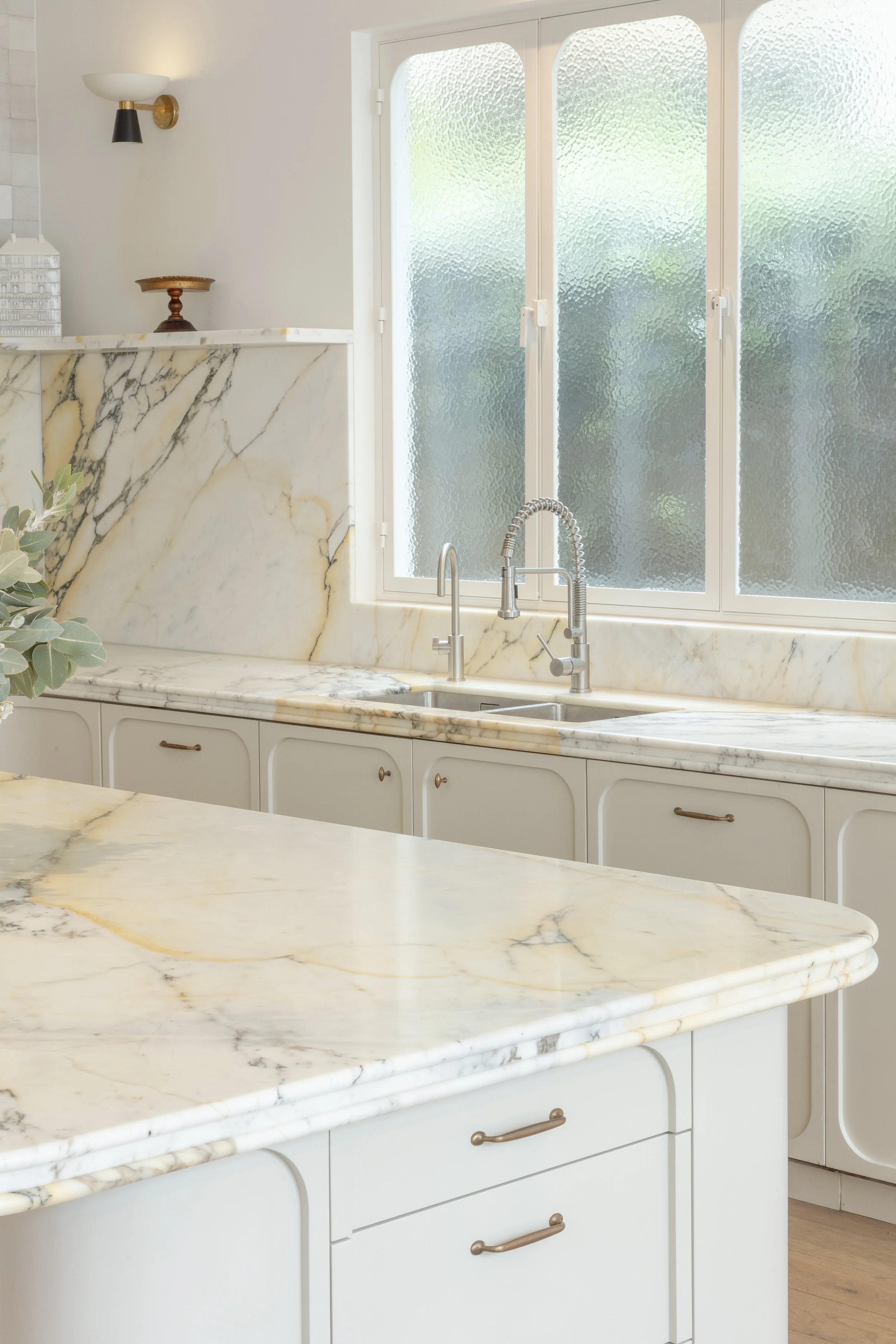
Natural stone benchtops are prized for their unique appearance and premium feel, with each slab offering one-of-a-kind veining and character.
Pros
Unique, natural beauty
Excellent heat resistance
Long lifespan when properly maintained
Adds value to high-end renovations
Cons
Porous and requires regular sealing
Marble can etch from acids like lemon or vinegar
Higher upfront and maintenance costs
3. Laminate Benchtops
Laminate remains a popular budget option in renovations, especially for rentals and first-home upgrades.
Pros
Affordable and widely available
Huge range of colours and stone-look designs
Lightweight and quick to install
Cons
Vulnerable to heat and moisture damage
Can chip or swell at joins
Shorter lifespan compared to stone
4. Timber Benchtops
Timber benchtops bring warmth and character, making them a favourite in coastal, farmhouse, and Scandinavian-style Australian homes.
Pros
Natural, warm aesthetic
Can be sanded and refinished over time
Works well as a feature island
Cons
Requires regular oiling
Susceptible to water damage and scratches
Can move with changes in humidity
5. Stainless Steel Benchtops
Stainless steel is commonly used in commercial kitchens but is gaining popularity in contemporary homes.
Pros
Heatproof, waterproof, and hygienic
Non-porous and easy to clean
Extremely durable
Cons
Scratches and fingerprints show easily
Industrial look not suited to all homes
Custom fabrication can be costly
6. Concrete Benchtops
Concrete benchtops create a bold, architectural statement and suit modern or industrial designed homes.
Pros
Customisable colour, thickness, and finish
Strong and durable when sealed correctly
Seamless, minimalist look
Cons
Requires sealing and ongoing maintenance
Can crack over time if poorly installed
Heavy and labour-intensive
7. Porcelain Benchtops
Porcelain benchtops are increasingly popular in high-end renovations due to their performance and versatility.
Pros
Highly resistant to heat, scratches, stains, and UV
Non-porous and extremely low maintenance
Suitable for indoor and outdoor kitchens
Cons
Premium price point
Edges can chip if impacted
Requires specialist installation
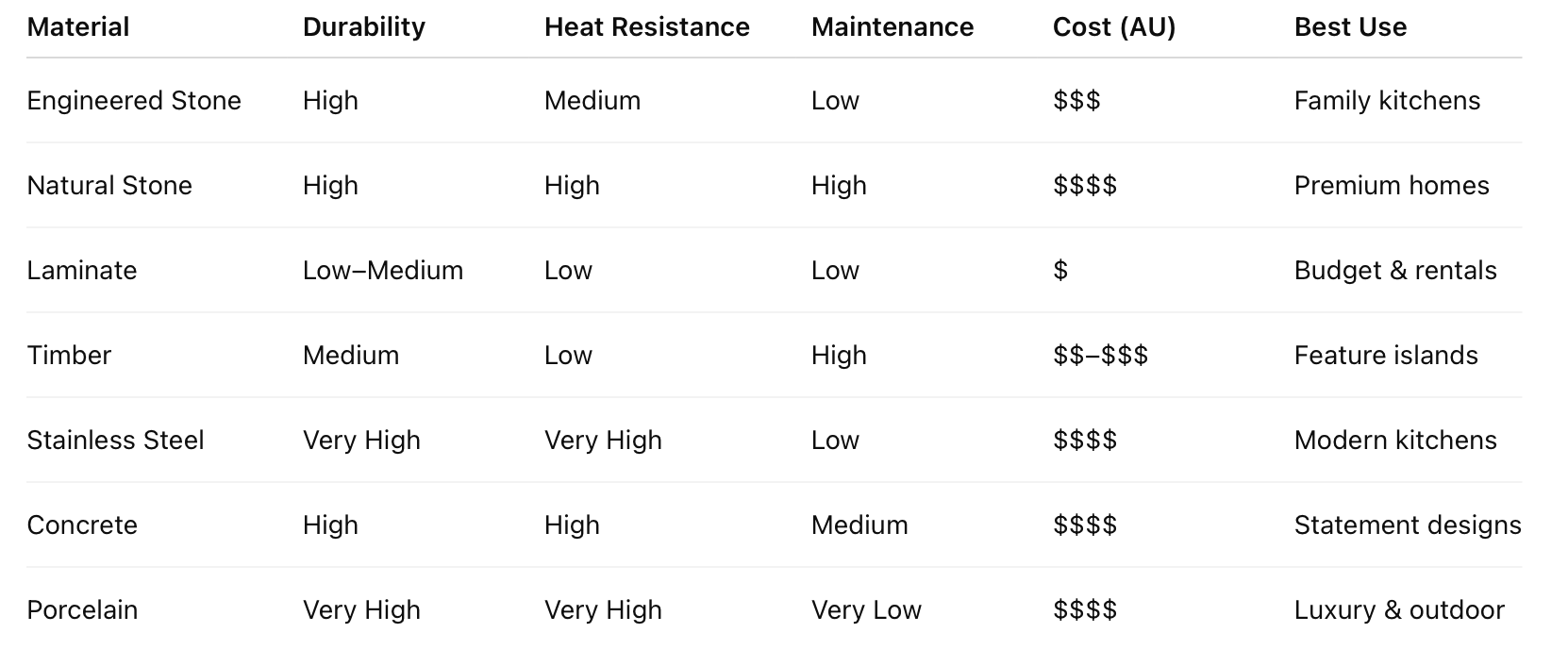
Put simply, there’s no single “best” kitchen benchtop. the right choice depends on your lifestyle, budget, and design goals. Busy families often prioritise durability and low maintenance, while design-led renovations may favour natural stone or concrete.
When planning your renovation, consider:
How much daily wear your kitchen gets
Your tolerance for maintenance
Whether heat resistance is a priority
Your overall renovation budget
A well-chosen benchtop will not only enhance your kitchen’s appearance but also stand up to years of everyday use.
Queenspark//